Walk through any health food section and count how many times you see the word 'natural'. In most markets, including Kenya, that word is unregulated. It can mean something. It can also mean nothing at all.
What the word actually signals
In the absence of a legal standard, 'natural' on a food label typically signals one of three things. A genuine commitment from the manufacturer to minimal processing and recognisable ingredients. A marketing choice designed to position the product favourably without making a specific claim that can be verified. Or something in between, a product that contains some natural ingredients alongside several that are not. Without reading the ingredient list, you cannot tell which of these you are holding.
The words that actually mean something
Rather than looking for 'natural', here are the terms that carry more weight because they are either regulated or verifiable.
- 1Certified organic, refers to a production standard that prohibits most synthetic pesticides, fertilisers, and additives. It requires third-party certification and is specific enough to be meaningful.
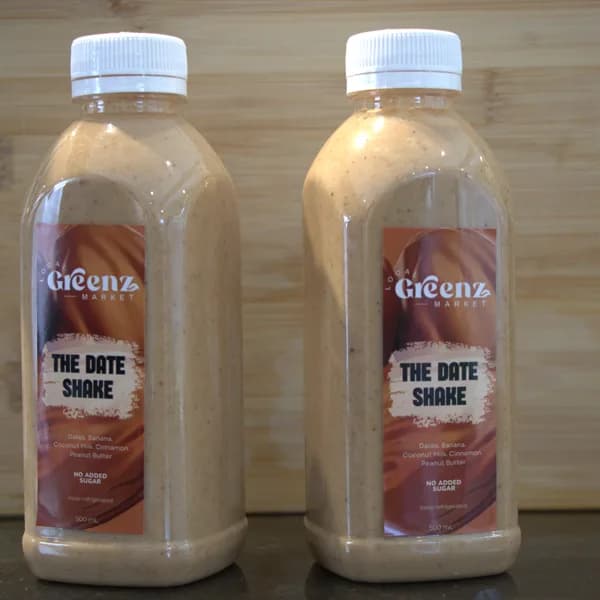
- 2No added sugar, means the manufacturer has not added sugar during production. It does not mean the product is low in naturally occurring sugars, but it is a specific, verifiable claim.
- 3Whole grain or whole wheat, refers to the inclusion of the entire grain kernel rather than a refined version. This matters for fibre content and glycaemic response.
The science: The European Food Safety Authority and the US FDA both maintain that 'natural' is a low-information term without a standardised definition. Claims that are specific and verifiable, ideally with third-party certification, carry genuine informational value. Vague claims invite interpretation the manufacturer does not intend to defend.
The simplest filter
When you see 'natural' on a pack, treat it as a prompt to turn the product over and read the ingredient list. If the list is short and the ingredients are recognisable, the claim may reflect reality. If the list is long and contains several unfamiliar names, the word on the front is doing work the back cannot support.
The product's ingredient list is always more informative than its front-of-pack claims. That is where the actual story is.
At Local Greenz, 'natural' is not a criterion. 'Clear, honest ingredients you can recognise' is. That is the standard we hold everything to before it reaches the shelf.
BSc Biomedical Sciences, MSc Molecular Medicine, and MRes Tissue Engineering for Regenerative Medicine (University of Manchester). 12 years in medical research, including 5 in medical diagnostics, before founding Local Greenz Market.

Every claim in the Journal is checked against ingredient data and research, not marketing copy. If it's here, it held up.